Total organic carbon (TOC): importance, methods and applications of TOC analysis
The sum parameter total organic carbon (TOC) refers to the total amount of carbon found in organic compounds within a sample. The concentration of total organic carbon in liquid and solid samples is one of the most important screening parameters in water and environmental analysis. High TOC contents may indicate pollution, biological activity, or process inefficiencies. Whether you look at the evaluation of water quality, waste disposal or cleaning validation, the evaluation of organic pollution is always needed.
Total organic carbon (TOC): A sum parameter
Total organic carbon measures the amount of organic carbon present in a sample. It detects all organic compounds, regardless of the exact individual parameters involved. This is why it is referred to as a sum parameter: it combines many different individual substances into a total value without breaking them down individually for measurement.
Water, for example, can contain several million types of organic molecules and these would then have to be identified and quantified individually using chromatographic methods. The only exceptions to this are certain classes of substances, such as polycyclic aromatic hydrocarbons. In comparison, TOC measurements are much less complex: by determining the sum of the individual substances, TOC analysis is a quick method for reliably evaluating water quality within a few minutes.
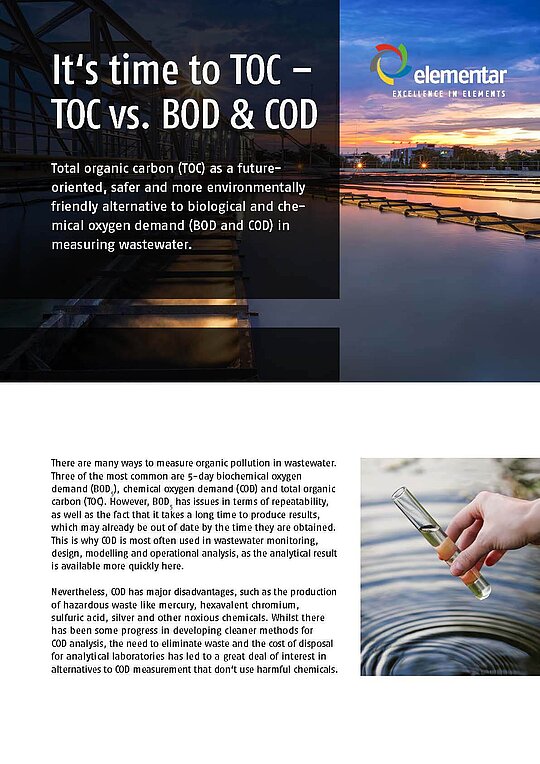
In addition to TOC analysis, two other sum parameters could be used for the determination of water quality: biochemical oxygen demand (BOD) and chemical oxygen demand (COD). Unlike the TOC method, these only indirectly determine the organic carbon content by measuring the oxygen demand during the decomposition of the compounds. In comparison, TOC analysis is a direct method with significantly faster measurements and complete oxidation, which leads to much more precise results.
DOWNLOAD YOUR COPY
Fill in the form to receive your download link per e-mail.
Your contractual consideration for the free provision of the download is the subscription to our personalized newsletter. By clicking on the “download now” button, you therefore declare your acceptance of the receipt of personalized newsletters by e-mail by Elementar Australia Pty Ltd and its group companies as well as the evaluation of your user behavior in this regard and - if available - the merging of this data with your data in our customer database.
In order to receive newsletters from our group companies it is necessary to transfer your above-mentioned personal data to these companies. The data transfer is contractually required.
You are aware that the subscription to our personalized newsletter represents the contractual consideration that you provide for the free provision of the download. You can unsubscribe from the newsletter at any time with effect for the future. You can object to the future use of your data for advertising purposes at any time. For further information, please refer to our privacy policy.
TOC analysis: The method
To determine the TOC content, the organic compounds contained in the sample must be oxidized to carbon dioxide. The resulting CO2 is then detected and quantified by the detector. There are two established methods existing for measuring TOC.
| Method | Oxidation principle | Sample types | Advantages | Typical use cases |
| High temperature combustion | Thermal oxidation with catalyst (> 680 °C) | Liquid & solid samples | High accuracy, no chemical reagents, low maintenance | Industry, pharma, research, environment |
| Wet chemical oxidation | UV light & persulfate | Liquid samples only | Ideal for ultrapure water, relatively simple setup | Pharmaceutical & ultrapure water |
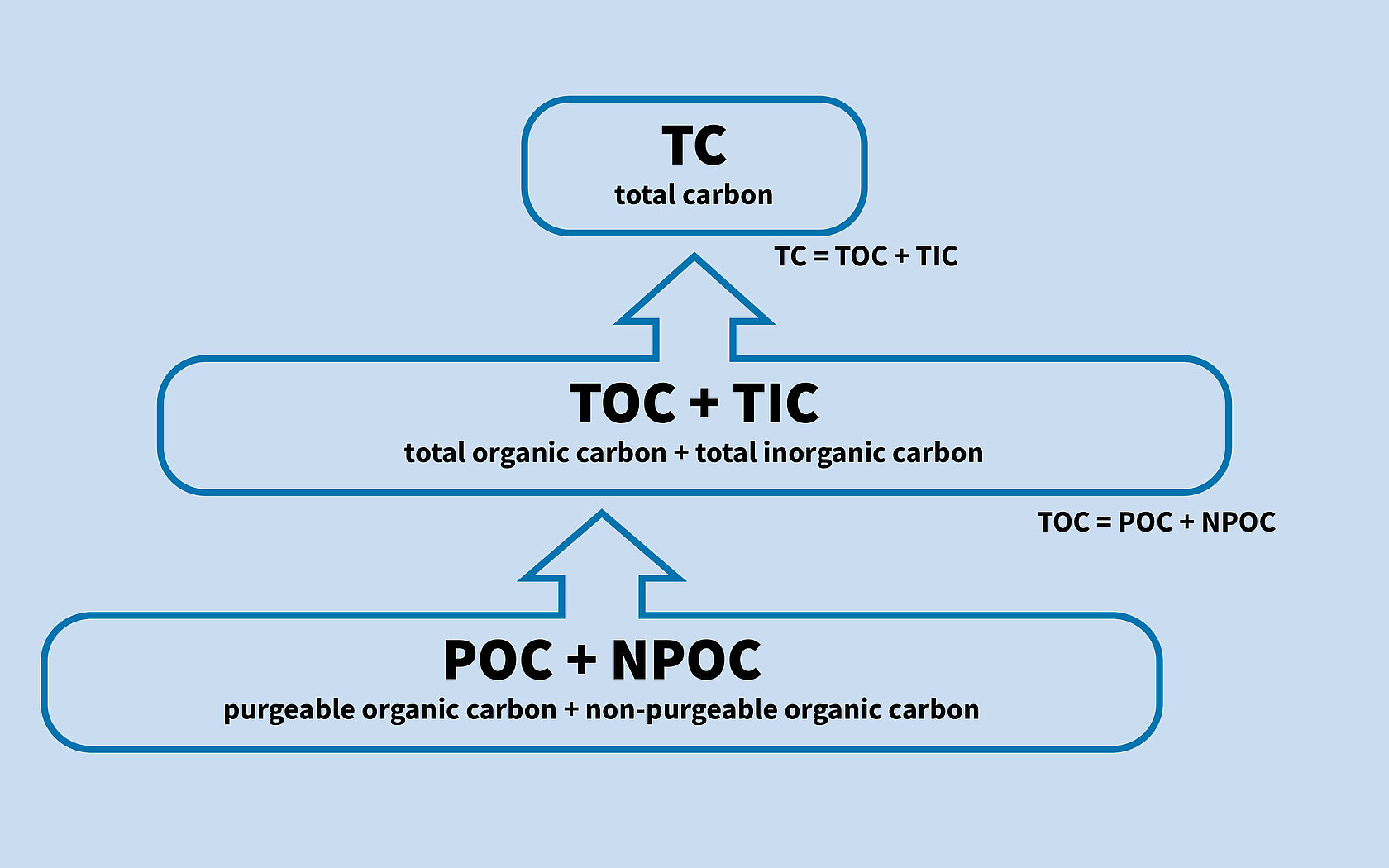
Different carbon fractions in water
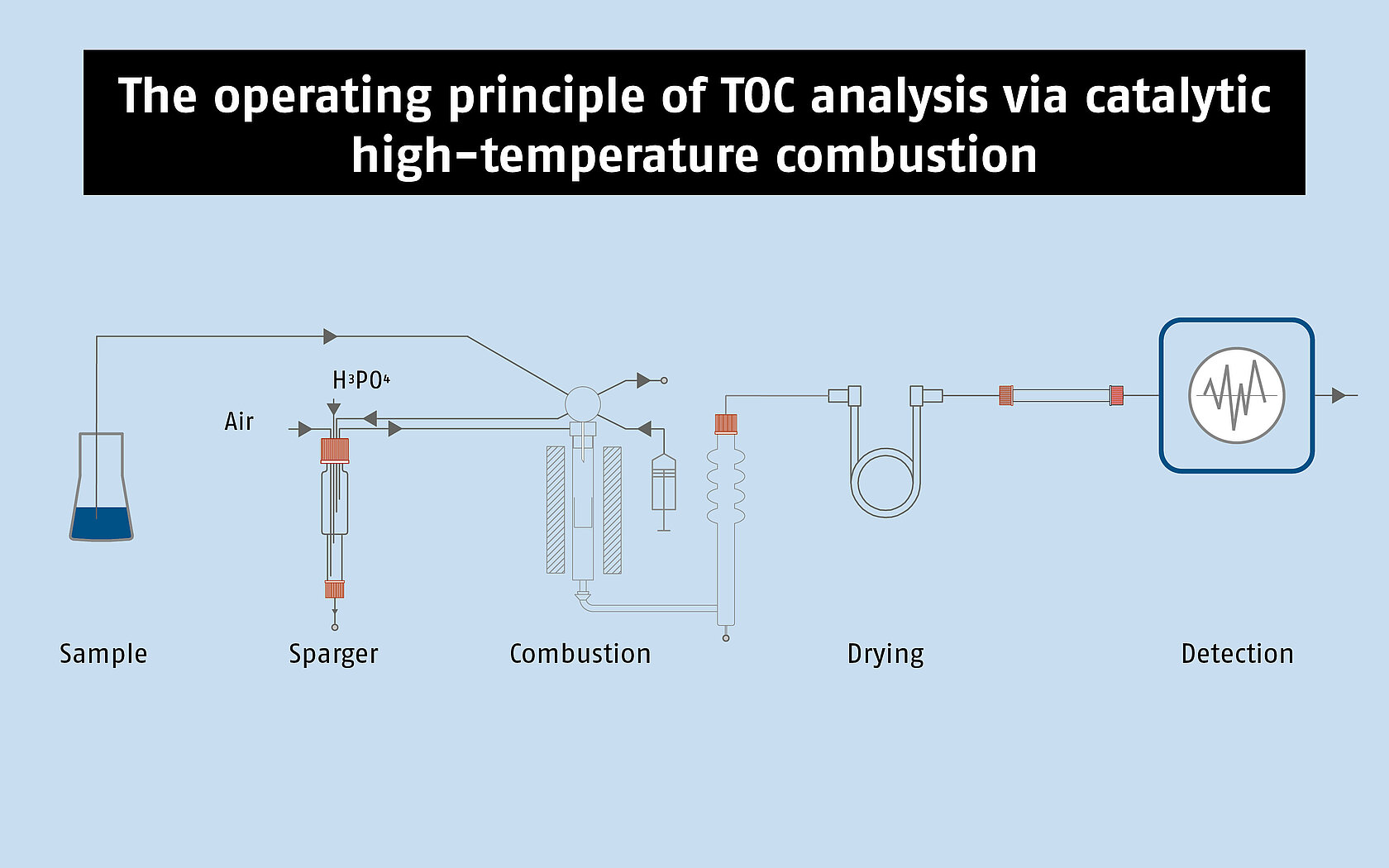
Catalytic high-temperature combustion
After pretreatment with an acid to remove the total inorganic carbon (TIC), the sample is injected into a combustion tube and combusted at > 680 °C. The use of a catalyst ensures that all organic compounds in the sample are converted to CO2, which is then detected by infrared detection. Complete conversion is important to obtain precise and accurate TOC measurement results. The TOC or NPOC (non-purgeable organic carbon) concentration is then derived from the measured CO2.
Advantages:
- Precise & accurate results because of quantitative oxidation of all carbon containing compounds.
- Low matrix influence; can also be used for salt and particle containing samples.
- Broad sample range from liquid to solid samples.
- Total nitrogen bound (TNb) can be measured as additional parameter.
Disadvantages:
- Lower injection volume & sensitivity compared to wet chemical UV oxidation.
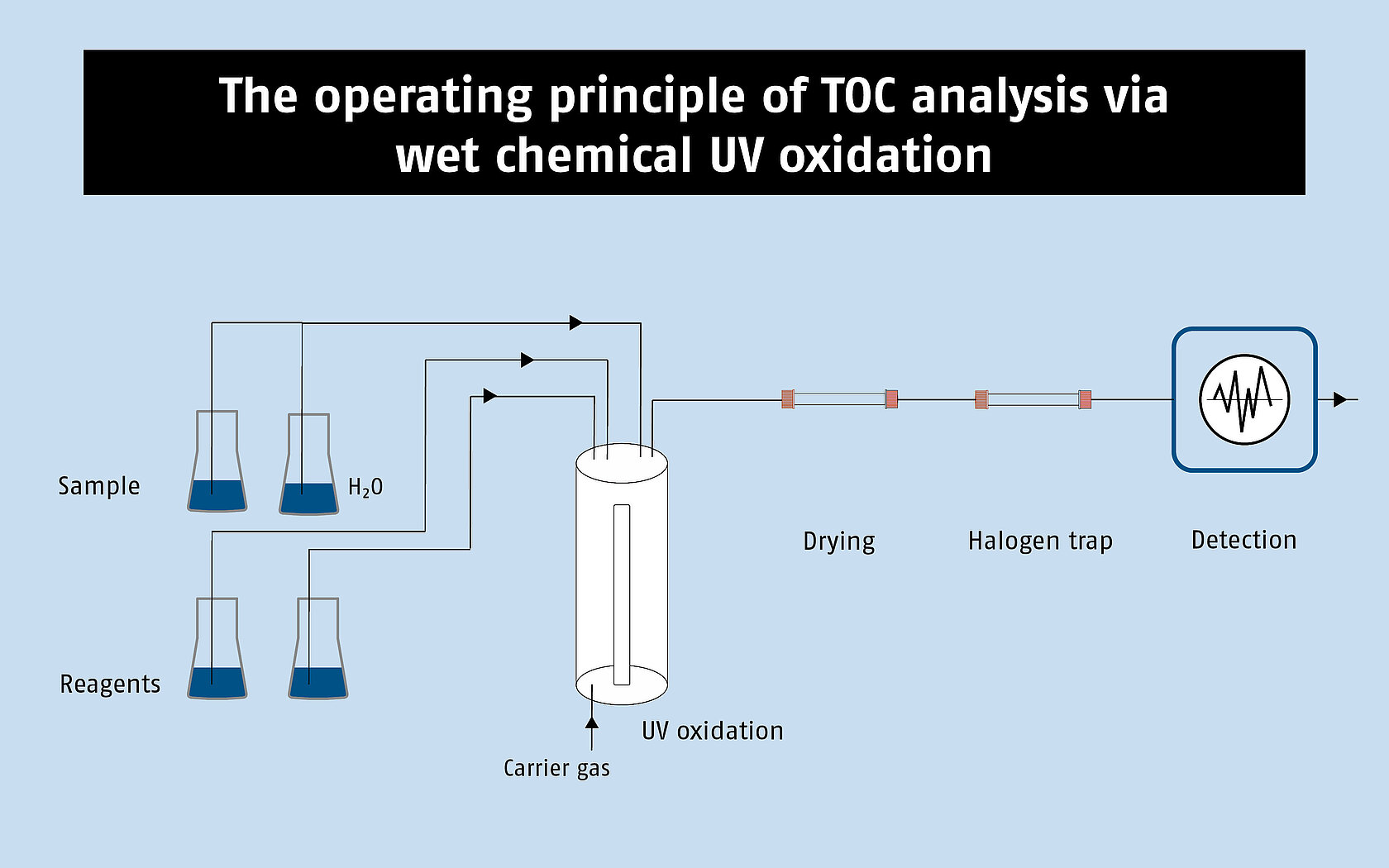
Wet chemical UV oxidation
An oxidizing agent is added to the sample, which is then oxidized in a reactor at around 80 °C while a carrier gas is passed through. Additionally, the sample can also be irradiated with UV light, which produces OH radicals. These ensure that organic substances are converted into CO2. In many modern TOC analyzers, the two methods are combined to achieve higher oxidation performance even for matrix-rich samples.
Advantages:
- Large sample volume (up to 40 ml).
- High sensitivity; can also be used for very pure liquid samples.
Disadvantages:
- Insufficient oxidation of particulates, therefore not ideal for measuring particle containing liquids.
- Not suitable for highly contaminated samples.
- Not usable for solid samples & for Total nitrogen bound (TNb) analyses (TN possible, if the digest is colorimetrically tested).
- No persulfate for sea water and samples containing high amounts of chlorine (formation of chlorine gas).
Relevant applications for TOC measurements
Environmental analysis

Environmental analysis helps to understand and protect the environment and ensure a sustainable future. Monitoring water, soil and air is essential for assessing environmental pollution and developing effective management strategies.
Water quality analysis is currently a major global issue. Clean drinking water, surface water, and the purest process water in industry are crucial for the future of people and the environment. In this context, total organic carbon (TOC) is an important sum parameter in water analysis.
TOC analysis is also important in waste management. Landfills are classified, among other things, according to whether or not they are permitted to accept environmentally hazardous waste. In waste management, total organic carbon (TOC) is used as a measure of contamination with organic compounds or to evaluate whether a material can be recycled.
Climate change
Carbon plays a growing role in climate protection strategies in various industries. Measuring the carbon content in soil, biochar, and biomass is important for monitoring CO2 storage, complying with legal regulations and optimizing production processes and business decisions for a more sustainable future.

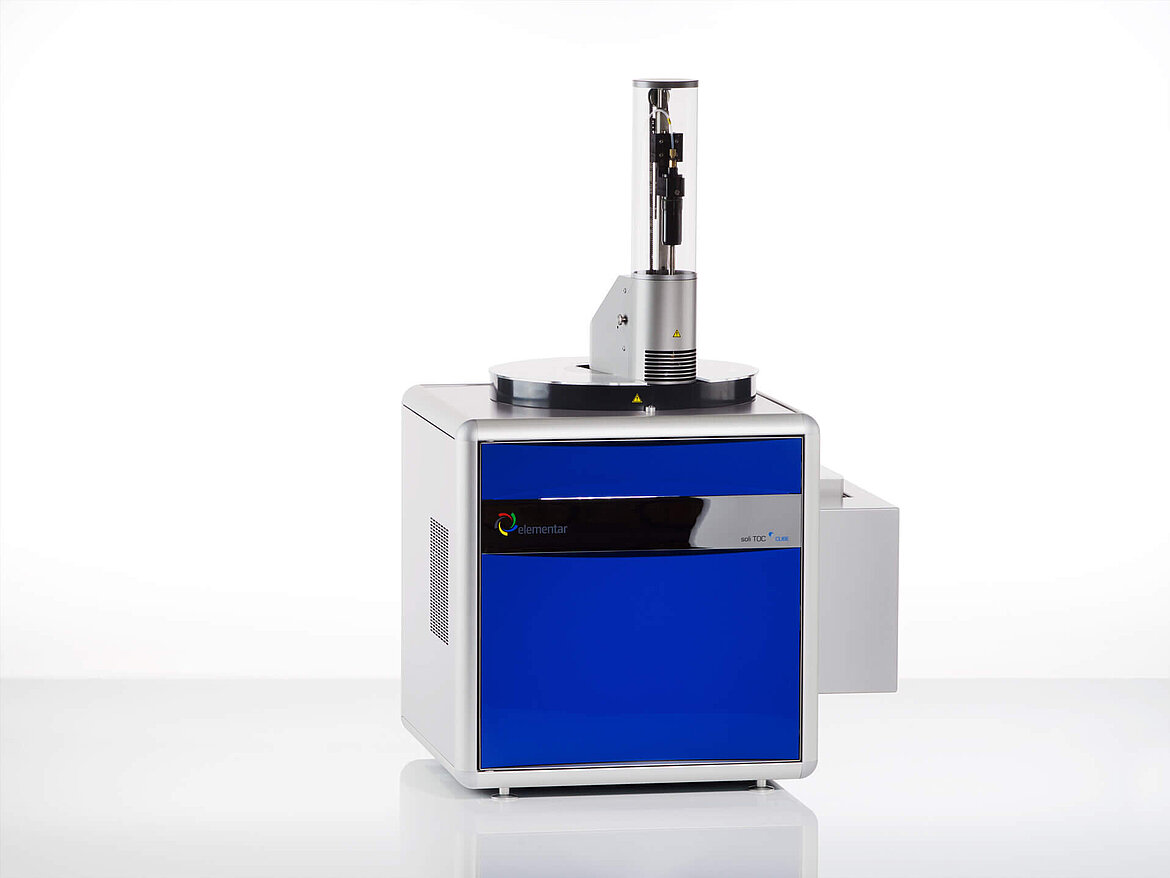
Analyzing the total organic carbon (TOC) content in soils provides essential information about microbial activity and helps to characterize and evaluate soils and sediments. Soils can also contain large amounts of biologically unavailable total inorganic carbon (TIC), typically in the form of carbonates. Residual oxidizable carbon (ROC) is another common source of carbon that is also not bioavailable. Separate measurement of these carbon fractions using the temperature programming method provides an accurate determination of bioavailable and thus environmentally relevant TOC. See our dedicated TOC analyzer for this application: soli TOC cube
Pharmaceuticals

The analysis of the TOC content plays an important role in enabling the safe production of medicines. Cleaning validation using TOC analysis in pharmaceutical production processes ensures that cross-contamination between product batches is prevented.
Typical TOC-contents of TOC-applications
| Drinking water: | 0.5 ppm –2 ppm TOC, 0.1 –1 ppm TNb |
| Surface waters: | 0.5 ppm –10 ppm TOC, 0.5 –5 ppm TNb |
| Waste waters: | 5 ppm –10,000 ppm TOC, 1 ppm –200 ppm TNb |
| Waste and soil: | upper ppm to percentage range of TOC |
| Waters in pharmacy: | 0.05 –0.5 ppm TOC |
| Waters in power plants: | 0.05 –1 ppm TOC |
| Waters in semiconductor industries: | 0.005 –0.5 ppm TOC |
Our range of TOC analyzers
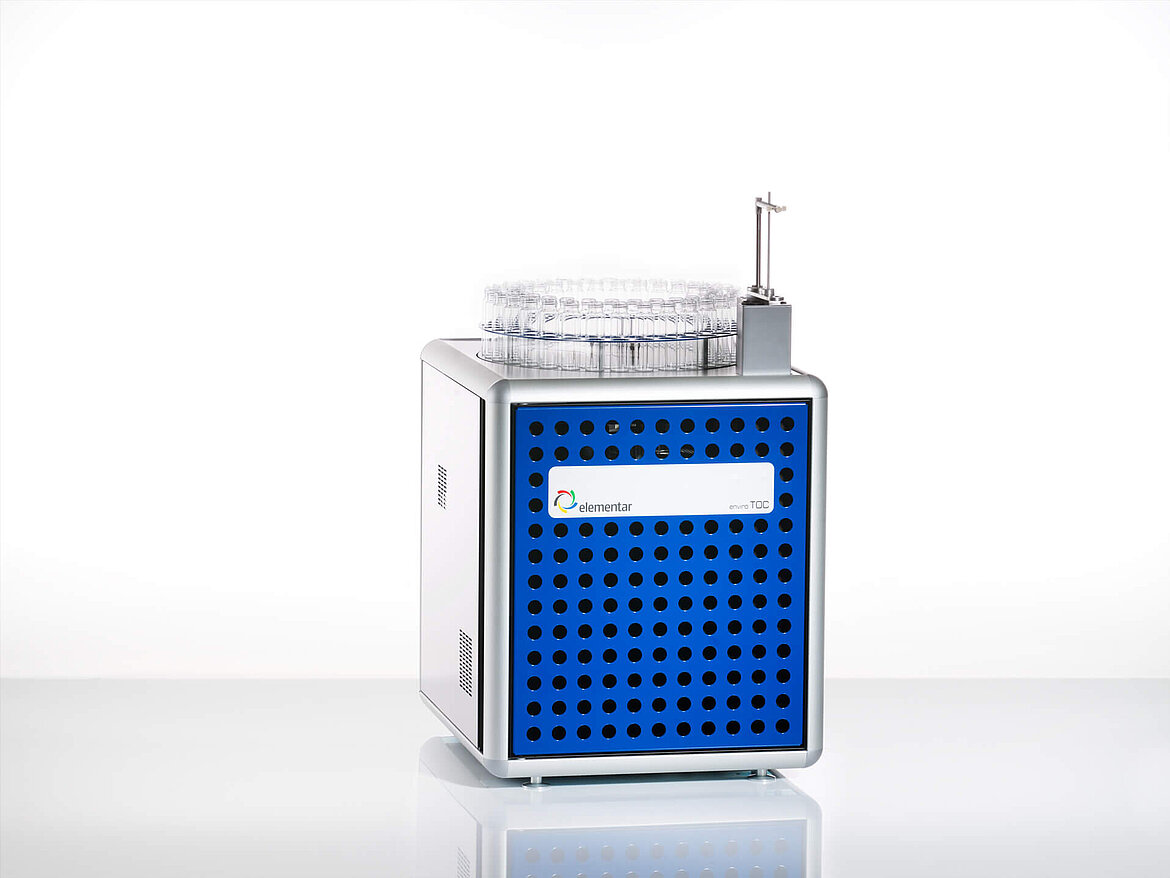
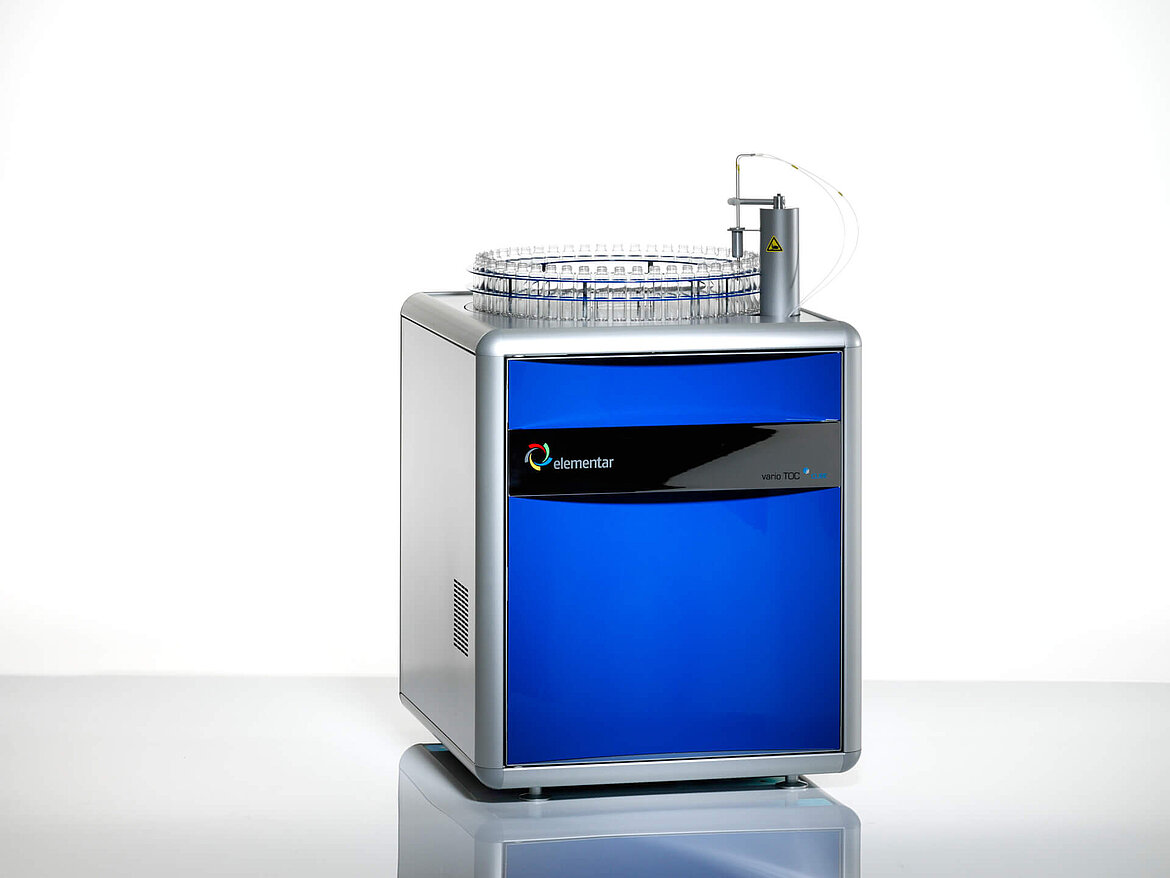
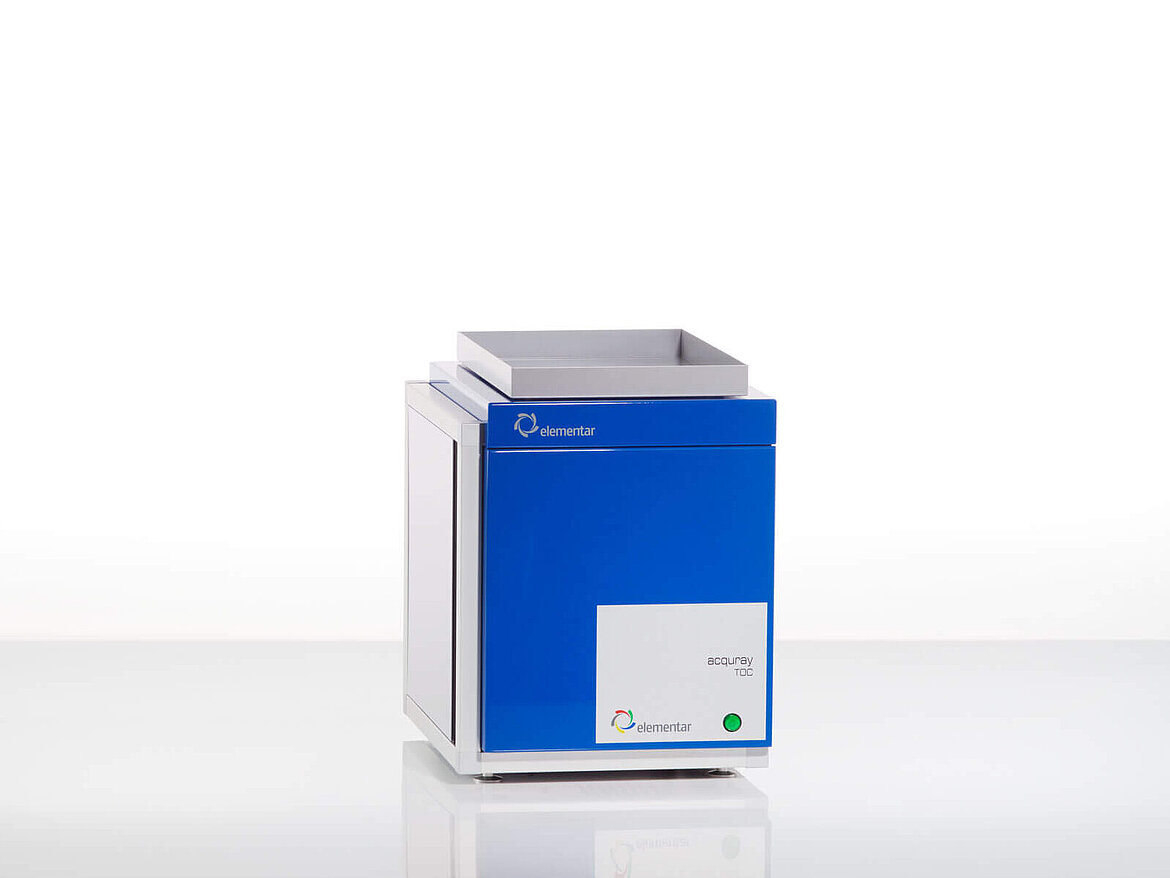
Our total organic carbon analyzers offer industry-leading versatility in TOC analysis. Our instruments are designed for delivering high-precise analysis results, long lifetime & low running costs. Our user-friendly, intuitive software and the tool-free maintenance make the operation of the TOC analyzers very easy. The fully automated sampler of our TOC analyzers efficiently leads to precise measurement results. The robust design guarantees highest possible uptime for routine operation.
Frequently Asked Questions (FAQ) about total organic carbon analysis & applications
TOC analysis quantifies the organic carbon content of a sample. It excludes inorganic forms such as carbonates and bicarbonates. It is often used to measure liquid samples like drinking water, surface water and water from cleaning validation or solid samples like soil, biochar and solid waste.
The high-temperature combustion method is considered the most accurate, especially for complex or solid samples. It is a direct measurement method that ensures, that all organic compounds are converted matrix-independent, which is important to obtain accurate TOC measurement results.
There is a broad range of TOC applications existing. It is commonly measured in environmental monitoring, pharmaceutical manufacturing, chemical production, agriculture and food processing.
Typical applications are liquid samples like drinking water, surface water and water from cleaning validation or solid samples like soil, biochar and solid waste.
No. Modern instruments, such as those by Elementar, are designed for user-friendly operation with automated workflows and intuitive software. This enables the operator, to achieve precise results with ease.
TC (total carbon) includes both organic and inorganic carbon. TOC (total organic carbon) refers specifically to the organic portion of carbon in the sample. High TOC contents may indicate pollution, biological activity, or process inefficiencies.
Do you have questions? Our team is there to help.
Our team is happy to answer your questions and and requests regarding our services, analyzers and the applications that can be covered. Just get in touch and let us know how we can support you.
If you would like to receive our newsletter, by clicking on the “Submit” button you consent to receiving personalized newsletters by email from Elementar Australia Pty Ltd. and its group companies, as well as to the evaluation of my user behavior in this regard and – if available – the merging of this data with my data in our customer database.
In order to receive newsletters from our group companies, it is necessary to transmit the above-mentioned data to them. The data transfer to these recipients is legitimized by your consent, which you give by clicking on the “Submit” button.
The newsletter can be canceled at any time with effect for the future as well as my consent to the transfer to our group companies can be revoked at any time. A revocation does not affect the legality of the processing carried out on the basis of the consent until the revocation. For more information, please refer to our privacy policy.