From Waste to Energy

From Waste to Energy - How new technologies turn refuse into valuable resources
There’s a quiet revolution taking place around the world in how we perceive and handle waste. It’s now no longer something we simply throw away, but rather increasingly valued as a resource for generating energy and securing a more sustainable future. Regardless of whether it involves incinerating household refuse, converting biomass into solid fuels, or transforming
plastics and other residual materials into liquid fuel, these various “waste-to-energy” technologies offer exciting alternatives to fossil fuels and promote the circular economy.
In our 2-part blog article, we look at some of the leading approaches and give a real-world example of how elemental analysis underpins advanced fuel research and the energy transition.
Waste incineration
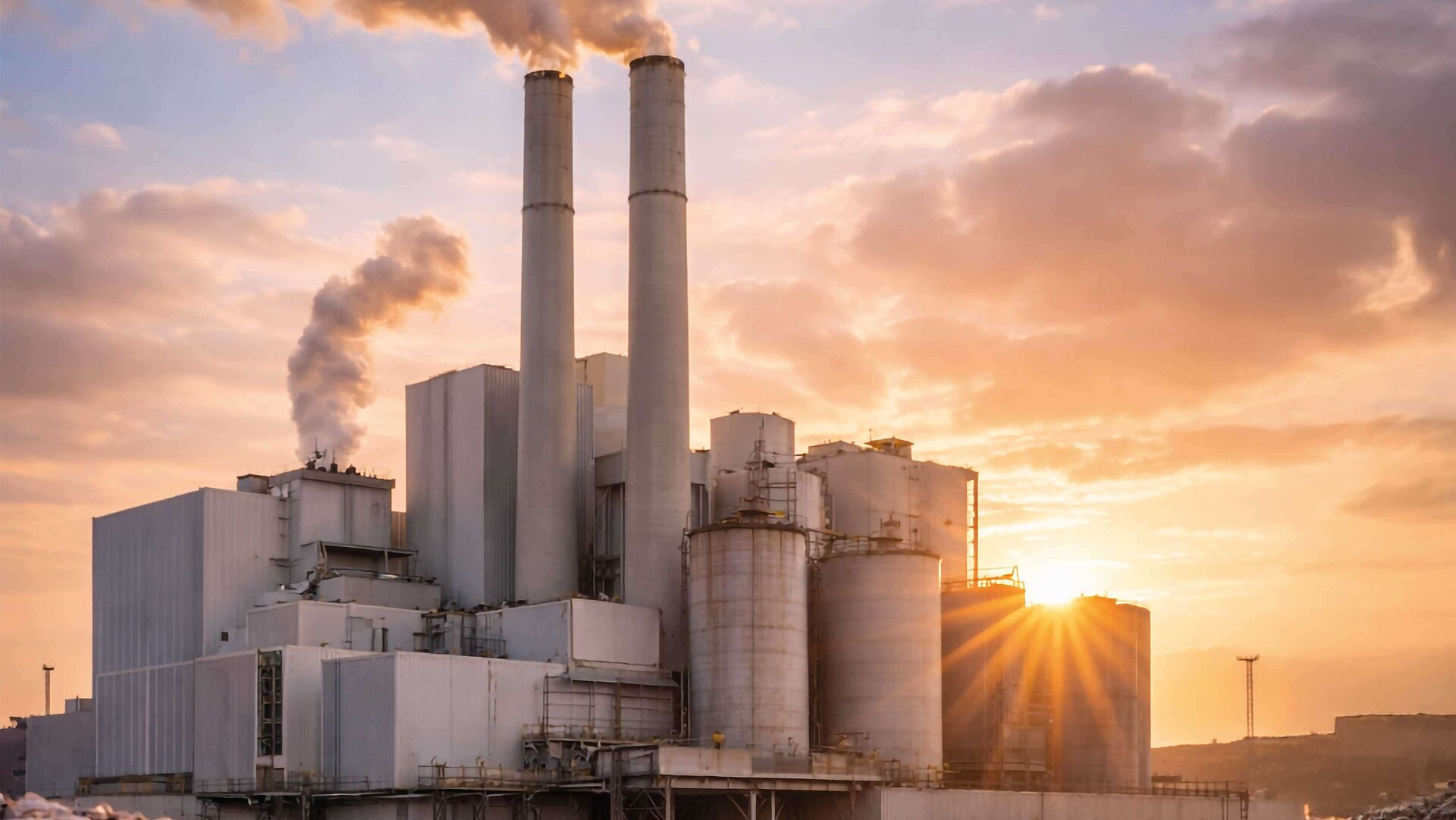
With a long track record, incineration remains one of the most developed methods for recovering energy from unwanted material. Exhaust gases pass through advanced systems that capture heat, filter out pollutants, and convert steam into electricity or supply it to local heating networks.
A key advantage of incineration is its ability to handle a wide variety of waste, but operators must continuously be on guard against potentially harmful impurities in the fuel. Regular testing and optimization are essential to ensure not only the best possible combustion efficiency and heat value, but also compliance with stringent environmental regulations. Carbon, hydrogen, nitrogen, sulfur, and oxygen (CHNSO) analysis of waste fuels, biomass fuels, and fossil fuels provides a basis for heat value calculation, while chlorine and other halogens require attention, as they cause corrosion in the combustion furnace. These measurements also indicate the optimal mixing ratio of waste fuels with supplementary biomass and fossil fuels, helping operators optimize combustion behavior and reduce the risk of corrosion damage.
While the goal remains a genuine circular economy in which materials are reused and recycled wherever possible, incineration is preferable to landfill, where organic matter decomposes and releases methane. Furthermore, using more sustainable raw materials, such as biomass, is better for the environment. Ultimately, the success of modern incineration plants rests on their ability to reduce pollution to a minimum while converting an increasing stream of waste that is not suitable for other recycling technologies into a valuable source of energy.
A real-world example: Hamburger Hungária Ltd utilizes the byproducts of the paper production process in the form of energy
Hamburger Hungária Ltd. provides a real-world example of how industrial processes can be optimized in line with the waste-to-energy concept. At its Dunaújváros site, non-recyclable paper residues from production are used as biomass fuel to generate heat and electricity for paper manufacturing. By combining these residues with other fuels such as wood chips, the plant can efficiently meet its energy demand while reducing CO₂ emissions.
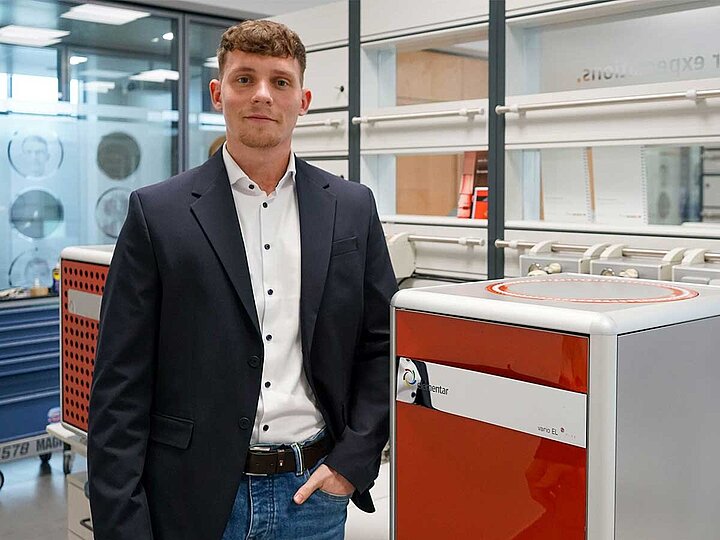
To further improve energy efficiency and environmental performance, the company uses elemental analysis technology. The vario MACRO cube continuously measures the carbon, hydrogen, nitrogen, sulfur, and chlorine (CHNS + Cl) content of the fuel mixture. This data enables precise calculation of calorific values, optimization of combustion processes, and monitoring of elements that could cause corrosion or harmful emissions.
Thanks to its advanced automation capabilities, the analyzer can carry out thousands of measurements annually, enabling optimized fuel use, reduced emissions, and a higher share of renewable energy sources. In this way, the technology supports a circular economy approach in which production residues are no longer treated as waste, but as valuable resources for sustainable energy generation.
Converting biomass into solid fuel
Turning wood chips, agricultural residues, or even paper pulp into solid fuels, is another way towards cleaner energy. Unlike fossil solid fuels, such as coal, biomass offers a significant climate advantage by relying on biogenic carbon – carbon that is already part of the short-term carbon cycle. When biomass is burned, it releases CO₂, but this carbon was previously absorbed from the atmosphere by plants through photosynthesis. As a result, no “new” carbon is introduced into the carbon cycle, making biomass effectively carbon-neutral when sourced sustainably. In contrast, burning coal releases ancient carbon from the longterm geological carbon cycle that has been locked underground for millions of years, adding new CO₂ to the atmosphere and intensifying climate change.
The determination of C, H, N, and S is part of the standard analysis and characterization of biofuels derived from biomass feedstocks. Due to the variety of different feedstocks, alternative fuels can vary in element concentrations, resulting in differences in the quality of the end product. Varying C, H, and N content leads to different calorific values as an indicator for the energy potential. The S and N must be strictly controlled due to the environmental impact during combustion. Furthermore, S and N can lead to corrosion in the combustion furnace when alternative solid fuels are being used.
A real world excample: University of Pécs evaluates the energy potential of waste material
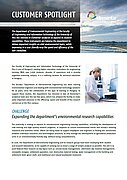
The Department of Environmental Engineering at the University of Pécs demonstrates how advanced analytical technologies support research in waste-to-energy and sustainable resource management. By investing in modern elemental and TOC analyzers, the department has significantly expanded its ability to study waste streams, alternative raw materials, and renewable energy sources.
The instruments enable detailed analysis of solid waste, refuse-derived fuels (RDF), biomass, and water samples, providing key data on carbon, nitrogen, sulfur, and chlorine content. These measurements are essential for evaluating the energy potential of waste materials, optimizing combustion processes, and ensuring environmental compliance in applications such as incineration and cement production.
Through automated, efficient, and low-waste laboratory workflows, the university can process large numbers of samples and generate valuable insights into waste composition, recycling potential, and energy recovery. This research not only advances academic knowledge but also supports the development of more efficient waste-to-energy technologies and contributes to a circular economy where waste is transformed into a valuable energy resource.
Generating energy from waste is no longer a novelty; it's becoming an integral part of many industrial programs.
But success depends as much on engineering and plant design as it does on accurate, consistent data about the materials at play.
In our second part of the article, we will focus on another technology: Sustainable Aviation fuel, converting renewable feedstocks and used cooking oil into sustainable liquid fuels.
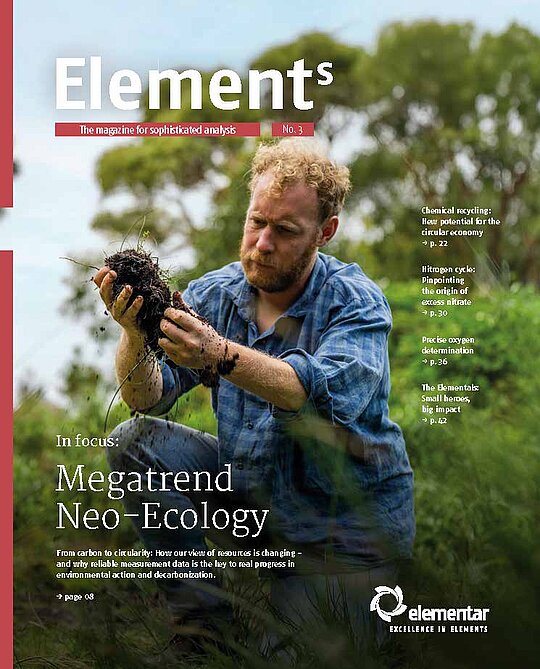
Element's Magazine No 3
In our ELEMENT's Magazine, we cover sophisticated analytical topics and show, how CHNOS elemental analysis, stable isotope analysis (IRMS), TOC analysis, protein analysis according to Dumas and optical emission spectrometry (OES) can be used and how they influence our daily life.
Edition No. 03 on Megatrend Neo-Ecology (Decarbonization, Chemical Recycling, Waste-to-Energy)
DOWNLOAD YOUR COPY
Fill in the form to receive your download link per e-mail.
Your contractual consideration for the free provision of the download is the subscription to our personalized newsletter. By clicking on the “download now” button, you therefore declare your acceptance of the receipt of personalized newsletters by e-mail by Elementar India Pvt Limited and its group companies as well as the evaluation of your user behavior in this regard and - if available - the merging of this data with your data in our customer database.
In order to receive newsletters from our group companies it is necessary to transfer your above-mentioned personal data to these companies. The data transfer is contractually required.
You are aware that the subscription to our personalized newsletter represents the contractual consideration that you provide for the free provision of the download. You can unsubscribe from the newsletter at any time with effect for the future. You can object to the future use of your data for advertising purposes at any time. For further information, please refer to our privacy policy.
Do not miss any new articles
NEWSLETTER
We will constantly publish new blog articles. Register for our newsletter to stay up-to-date and get informed about latest blog articles, news and trends.